The White House is a symbolic icon of America - it’s where the world-famous president resides, it’s bursting with many historical artifacts, meticulous architecture and much more.
Perfect and captivating in every way.
Many see the White House as a governmental facility, which it may be, but there’s truly more to it than laws and justice. It’s not a building - it’s a symmetric masterpiece.
For our first section, we’ll be looking into the main chambers of the White House.
The Grand Foyer
The Grand Foyer is the welcoming room for visitors: as soon as you enter, you’ll find a wonderfully spacious room, with a marble floor, proudly-standing columns looking like fearless, silent guards and exquisite chandeliers. A spiraling double-staircase is the centerpiece of the room, grandly swirling to the State Floor lying above. Flowers and other forms of plants usually decorate the foyer, making it vibrant, bright and inviting.
The East Room
After carefully proceeding on the winding staircase, your eyes will be treated to the grand, ornate East Room. Official ceremonies and conferences are usually held here, and the decor is regal and elegant - former presidents have portraits lining the walls, giving visitors the opportunity to learn more about America’s most prestigious building.
The Oval Office
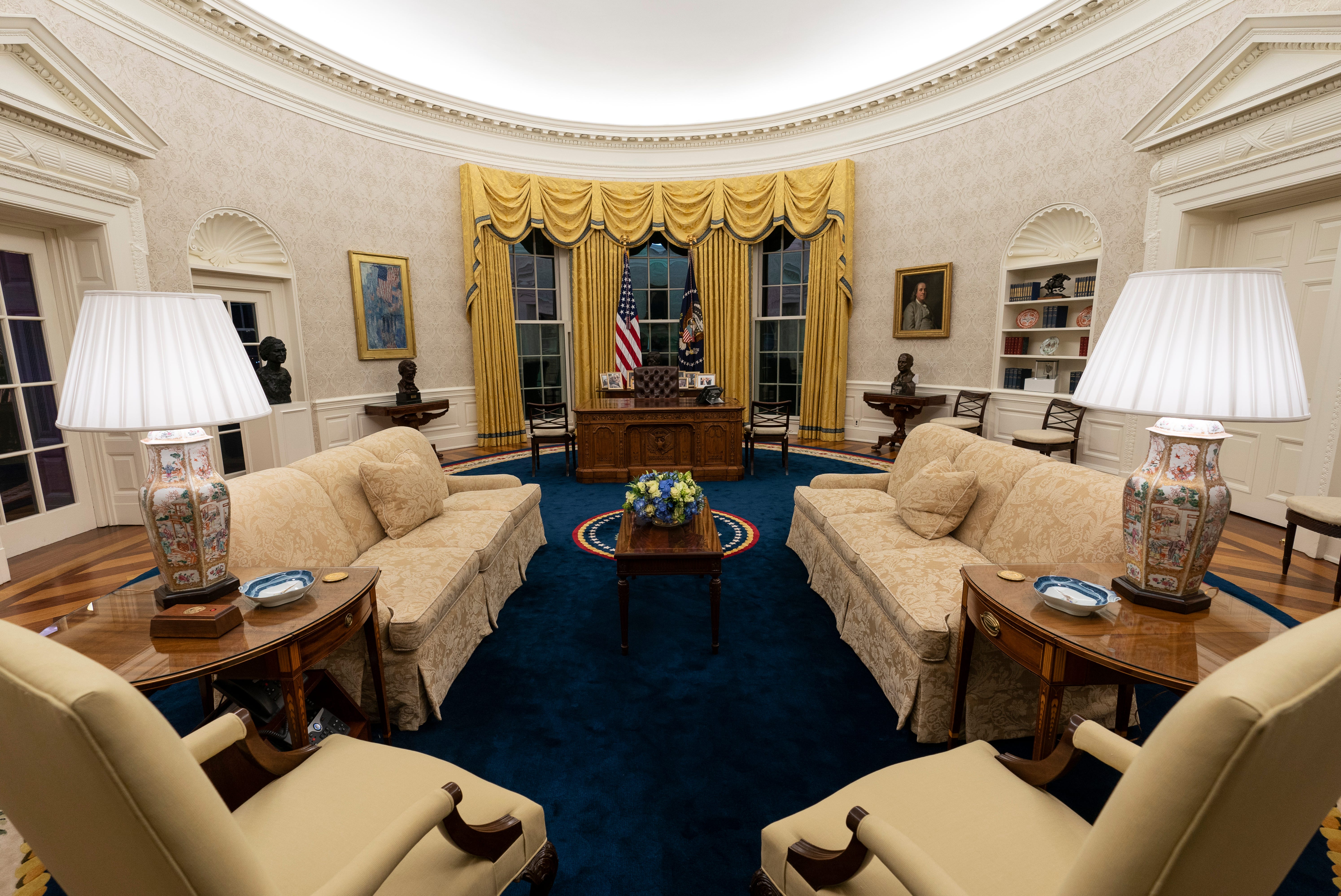
The Oval Office is one of the best offices on our planet. The president primarily works here, on the famous Resolute Desk touched by many other famous figures. The office is adorned with historical artifacts, and the meaningful history behind it creates a sense of awe if you ever step into it.
The Oval Office: Elegant, Spectacular, Exquisite
The Green Room, Red Room and Blue Room
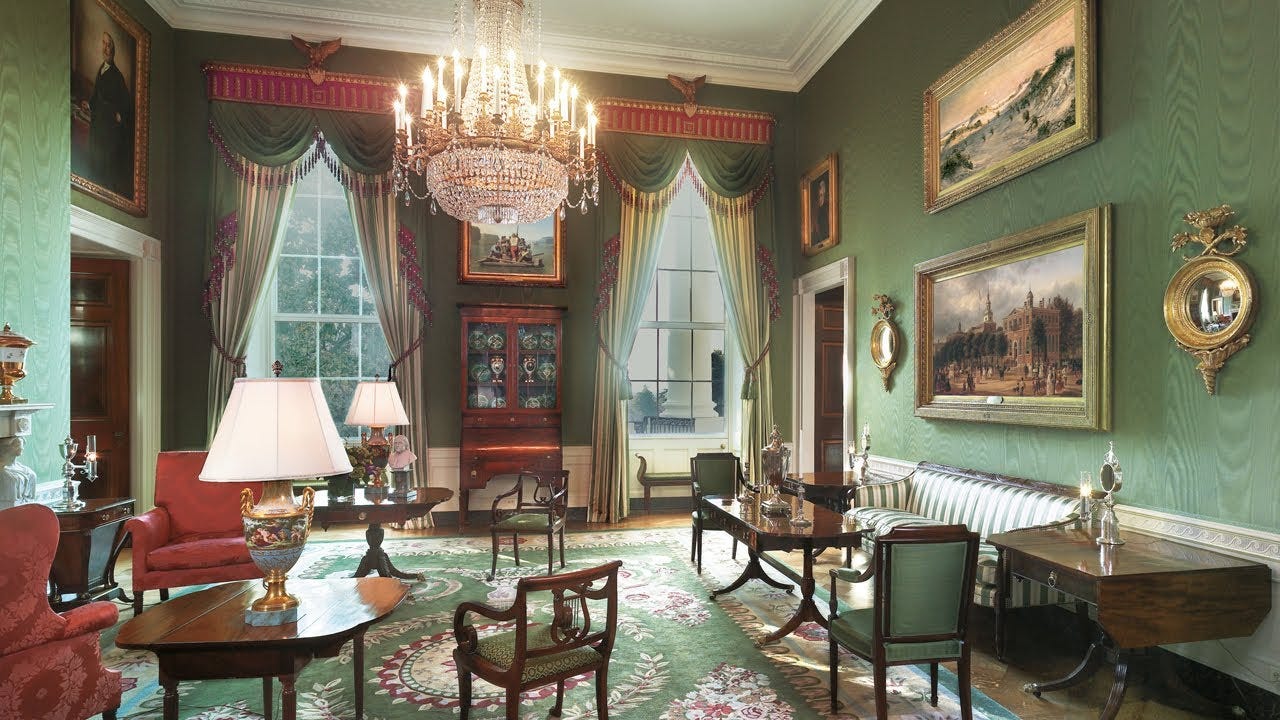
The Green Room, has a green-and-gold theme, creating a relaxed and laid-back atmosphere. Furniture from the 18th and 19th century displays the amazing craftsmanship furniture makers have to offer.
The Green Room: Formal and Basic
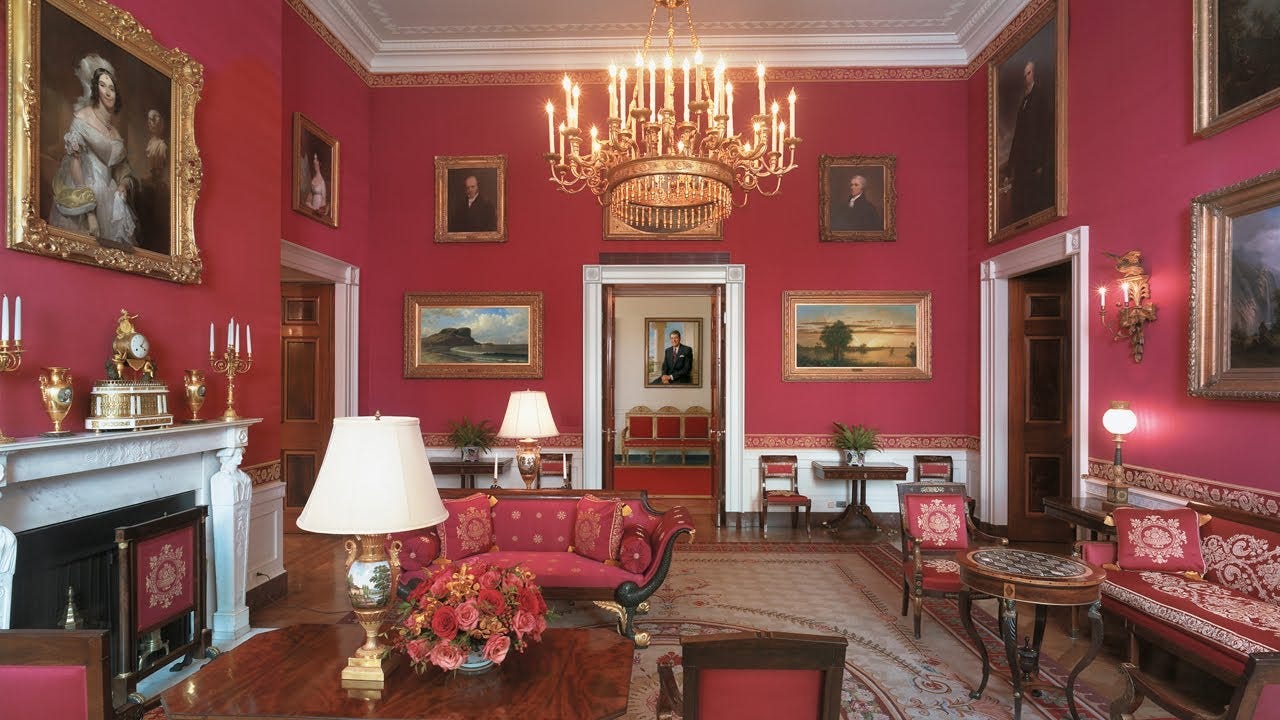
The Red Room offers a wide assortment of different crimson and rich red hues, throughout its smooth wallpaper to regal furniture. It’s used as a smaller meeting room, yet its elegance is still very high.
The Red Room: Themed and Regal
The Blue Room has a very light, summery feel to it, with light-blue as the main theme - important guests usually meet here with the president and hold meetings together.
For our second section, we’ll be discussing the wide history the White House has to offer.
The White House was born when George Washington created the country’s national capital along the Potomac River (still famous today), which in future would be named Washington, D.C. The construction of the White House, which at the time was named the President’s House, was led by James Hoban at George Washington’s request. The Leinster House located in Dublin was inspiring for Hoban, and it became the main foundation for what the White House grew to be.
But, the construction was for nothing. During the War of 1812, when Britain invaded America’s capital in 1814, the White House took a loopy turn from its history. British soldiers burned the building to the ground, ruining the amazing grandness and ambiance the White House had. Whatever was left became a symbol for perseverance and resilience that Americans had towards the war. James Hoban led the construction again, and by 1817 the White House had gained back its endless glory.
The White House still evolved, though. As new presidents were appointed, they left new and improved changes on the interior (and sometimes exterior) of the White House.
In 1902, President Theodore Roosevelt began a major renovation and property expansion for the White House, choosing the architect Charles Follen McKim to lead the project. The West Wing and Oval Office were added, allowing the president to have a quiet yet elegant workspace.
When Franklin D. Roosevelt earned the title as president, he helped install the East Wing, which now includes the White House Visitor Center.
In 1961, First Lady Jaqueline Kennedy started an effort to better preserve the historical significance behind the White House. Her objectives helped create the White House Historical Association, which helps others learn about the amazingness within the walls of the White House. The building officially became a National Historic Landmark in 1960 as a result of that.
More recently, President Biden has personalized the White House in his own ways. For instance, President Joe Biden updated the Oval Office, adding a nicer, cleaner touch to the already regal room.
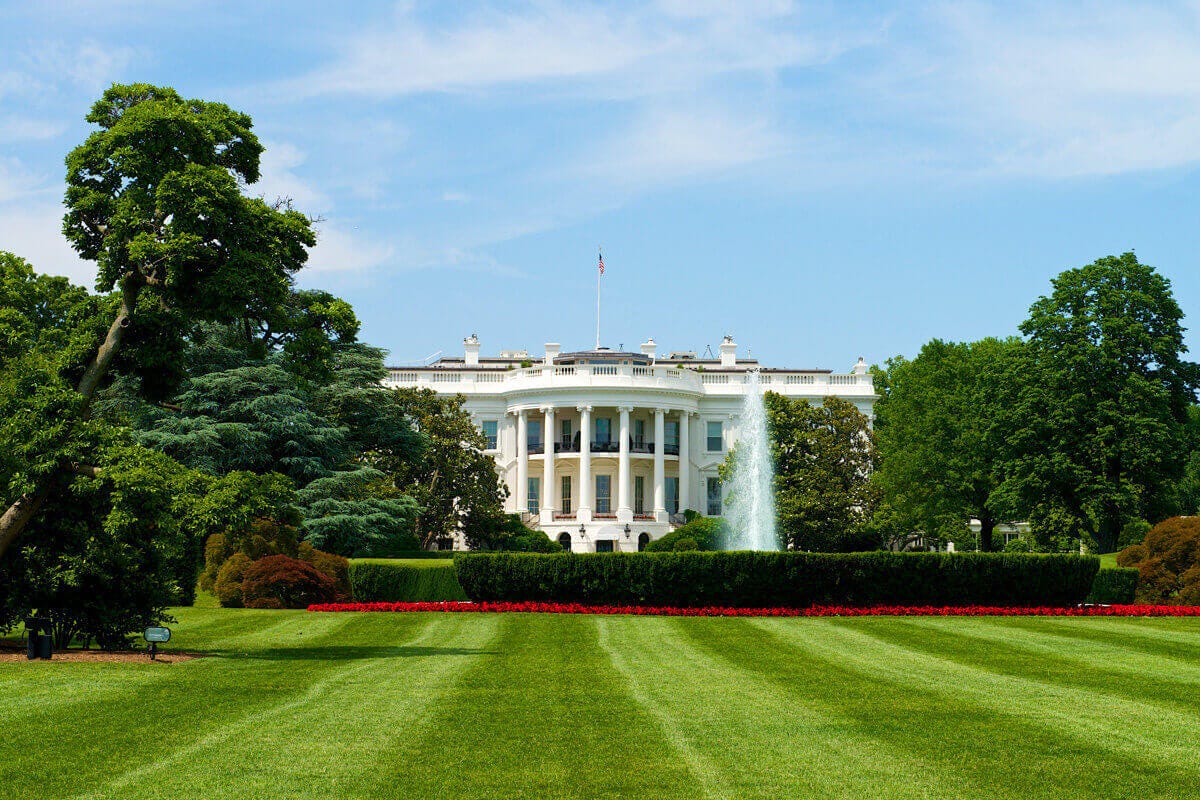
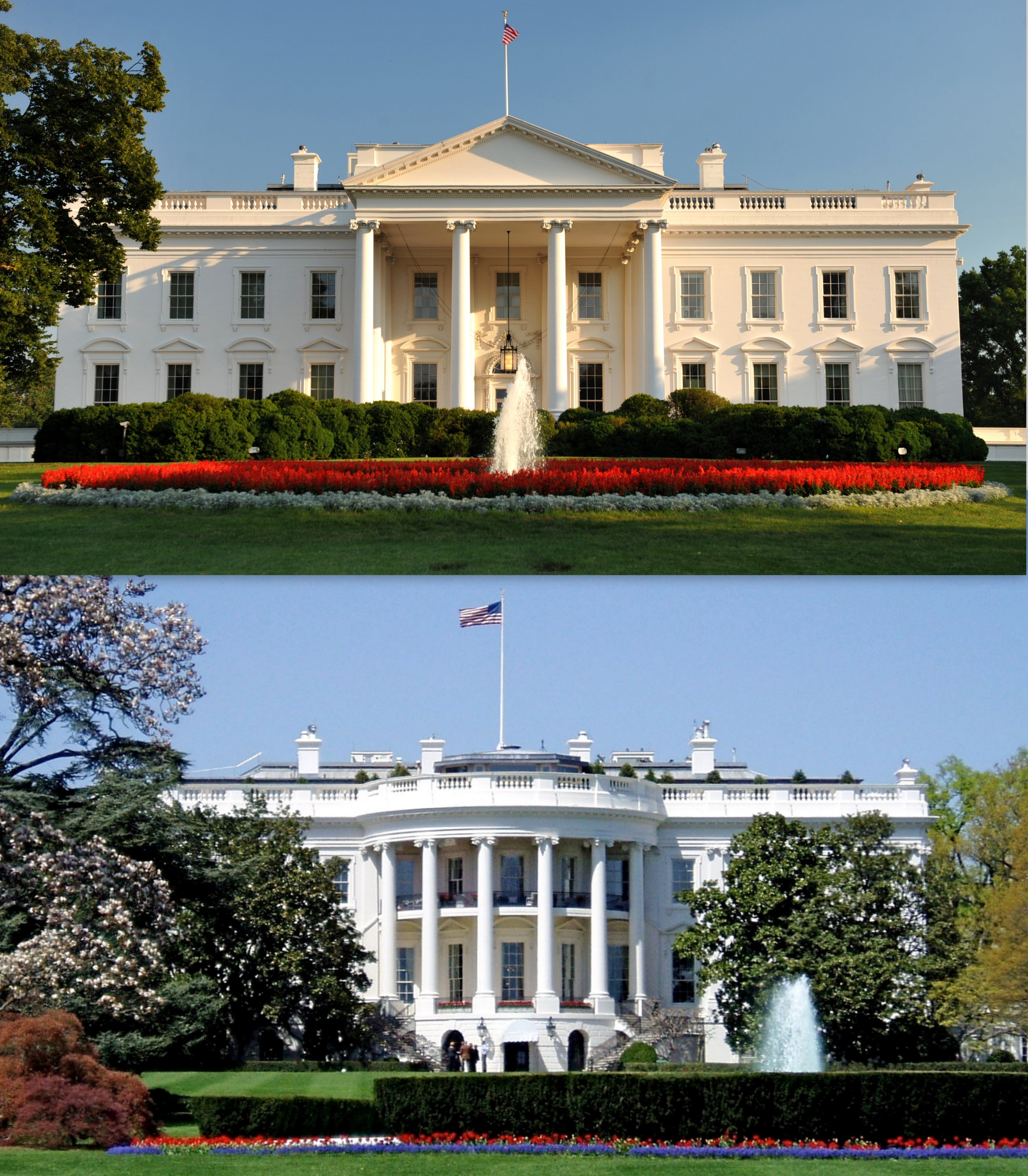
The White House is also interesting in a different way: instead of the front being extra grand and imposing, it’s the back that has all the photographs taken of it, and all the attention and fame. The front - well, let’s just say it’s slightly underwhelming and unimpressive, compared to the back.
[Top to Bottom]: The Front of the White House, The Back of the White House
Many tourists have found this surprising, but the lack of security around the president’s residence is even more confusing. When we visited Washington, D.C. to review and analyze the city for one of our future articles, we carried out extensive research regarding the White House. When we were snapping photos of the white house in person, we were shocked that we only saw one single Secret Service officer guarding the perimeter.
FUN FACTS
In the current White House, there are 132 rooms, 35 bathrooms and 6 levels in the Residence. 412 doors, 147 windows, 28 fireplaces and 3 elevators are within these rooms.
570 gallons of paint is required to paint the exterior of the White House.
As well as the President’s House, the White House has also been known as the President’s Palace and the Executive Mansion.
In conclusion, the White House is bursting with interesting artifacts, meticulous architecture and elegant rooms. Rich with history and heritage, this building is one-of-a-kind!
Thanks for sharing your thoughts and opinions. Whilst it may be quite over expensive, the grandness and beauty of the White House stands today as a monumental icon of America.
It’s a very grand house, but some say that, when visiting it in person, it is a bit underwhelming and less opulent than photos show. When we visited the White House to test this theory, we found that the photographs did shine extra glory on the White House. This is because the President was never intended to be a very important job - the state governments were seen as more powerful and influential at early times.



I'm not convinced it's a good use of taxpayers' money.... it's even more opulent then I thought. Some jaw dropping stats you have presented
Thanks for sharing your thoughts and opinions. Whilst it may be quite over expensive, the grandness and beauty of the White House stands today as a monumental icon of America.
It’s a very grand house, but some say that, when visiting it in person, it is a bit underwhelming and less opulent than photos show. When we visited the White House to test this theory, we found that the photographs did shine extra glory on the White House. This is because the President was never intended to be a very important job - the state governments were seen as more powerful and influential at early times.
Interesting!
We’re very glad you enjoyed our article!